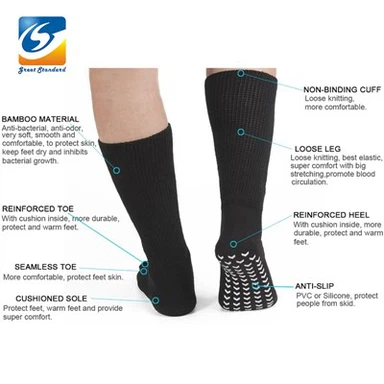
Bamboo Fiber Socks: One of the most popular styles---Great products for your business list
Aug 14, 2026
Every morning, millions of people around the world reach for a pair of socks without thinking twice. But a quiet revolution is happening at the bottom of the wardrobe: bamboo fiber socks - once dismissed as a niche eco-novelty - have become one of the fastest-growing categories in the global sock market, combining softness, breathability, and sustainability in a single product that consumers are actively seeking out.

I. Industry Data: Bamboo fiber socks are carving out an increasingly larger slice of the big sock market.
Let's look at some key data:
Three key findings:
1. The overall market is driving growth in niche categories.
The global socks market was valued at approximately US$49.5 billion in 2025 and is projected to reach US$73.8 billion by 2033, growing at a CAGR of 5.2% (Grand View Research). Every new pair of socks sold is a potential "bamboo switch" - and as consumers upgrade their expectations of everyday basics, the substitution from cotton and synthetic blends to bamboo socks is accelerating.
2. Bamboo socks are the fastest-growing subcategory in sustainable hosiery.
The global bamboo sock market is set to expand from US$1.31 billion in 2026 to US$2.15 billion by 2035, at a CAGR of around 6% (Business Research Insights). The signal from Europe is even stronger: while the overall European socks market grows at a modest 2.62% per year between 2025 and 2029, socks made from sustainable fibers such as bamboo, modal and Tencel are growing at an average annual rate of 10.8% (CBI, Netherlands Enterprise Agency).
3. Sustainability has become a core driver of sock exports.
Eco-certified products command a clear premium in the world's most valuable retail channels, and European and American consumers consistently show willingness to pay more for certified sustainable textiles. For exporters, bamboo fiber has shifted from a "nice-to-have" material story to a basic entry requirement - a trend confirmed by the rapid expansion of certified bamboo and organic fiber lines from global brands.
II. Regional Breakdown: Where is the Money?

North America (Largest consumer market for sustainable socks)
Market Characteristics: A deeply entrenched wellness and eco-conscious culture; bamboo socks are positioned as both a comfort product and a lifestyle statement.
Price Range: Retail prices for premium bamboo socks from leading DTC brands typically start at around US$10 per pair (The Good Trade), with multi-packs and subscription models lowering the effective price per pair.
Channel Characteristics: A DTC-first landscape - brand websites + Amazon + boutique retail. Gift sets and subscriptions are proven repeat-purchase engines.
Europe (The sustainability gatekeeper)
Market Characteristics: Germany, the UK and the Nordic countries are core markets with the world's highest sensitivity to material sourcing and environmental claims.
Trend Signal: Sustainable fiber socks (bamboo, modal, Tencel) are growing at 10.8% annually against a 2.62% overall market growth rate (CBI) - proof that "green" is not a niche but the category's growth engine. OEKO-TEX and GOTS certification is becoming an "invisible ticket" to European retail shelves.
Asia Pacific (The origin and the fastest-growing production base)
Market Characteristics: Bamboo grows natively across the region, and China, Japan, South Korea and Australia lead both production and premium consumption. Australia's Boody built a global DTC brand from bamboo basics, proving the regional playbook can travel worldwide.
Channel Characteristics: Factory-direct wholesale plus rapidly growing domestic e-commerce; Australian and New Zealand DTC brands export the "bamboo story" to global consumers.
III. Product Innovation: From "Wearable" to "Comfortable" to "Want to Buy"
The product iteration logic of bamboo socks has completed a three-stage leap from "functional competence" to "experience upgrade" and then to "emotional value":
First Stage: Basic Functions (Entry-Level Standard)
Naturally breathable and moisture-wicking bamboo fiber that keeps feet dry and odor-free
Temperature-regulating comfort across seasons - cool in summer, warm in winter
A soft, skin-friendly touch that is gentler than cotton on sensitive skin
Durable blends (bamboo + cotton, bamboo + nylon/spandex) for shape retention and longevity
Second Stage: Experience Upgrade (Differentiated Competitive Advantage)
Seamless toe construction for zero-irritation wear
Zoned cushioning and arch support for all-day comfort
Mesh ventilation zones and anti-slip grips for sport and wellness applications
Reinforced heel and toe for a longer service life
Third Stage: Emotional Value (source of brand premium)
Design-driven purchase:natural, minimalist palettes and bamboo-inspired textures turn socks into "wardrobe heroes"
Eco-story:every pair tells a sustainability narrative - consumers buy the feeling as much as the fabric
Gift sets & multi-packs:3–5 pair curated sets are a proven DTC blockbuster strategy
Native social media content: beautiful, eco-conscious socks are naturally shareable on Instagram and TikTok

Patent and technology trend signals:
Industry analysis shows patent activity around sustainable sock materials has intensified, focusing on:
Optimized bamboo blending ratios and fiber treatment processes
Seamless knitting technology and zoned comfort construction
Fully biodegradable and recyclable material formulations
This means technical barriers are forming, and early movers have the opportunity to build a durable competitive moat.
IV. Material Science and Certifications: Why Bamboo Fiber?
Key Trend: Sustainability has moved from a marketing slogan to a material-science advantage.
Bamboo is one of the fastest-growing plants on earth - renewable, naturally regenerative, and fully biodegradable at the end of its life. When processed into fiber, it delivers:
Breathability and moisture wicking that surpass most cottons
Natural temperature regulation that keeps feet comfortable in any season
A softer hand-feel that becomes more comfortable with every wash
Skin-friendly characteristics ideal for sensitive and allergy-prone wearers
Certifications are the "hard currency" of this category:
OEKO-TEX - safety and non-toxicity assurance for global markets
GOTS - the standard for organic, responsibly produced textiles
FSC - traceability of responsibly sourced bamboo raw material
European and American consumers are willing to pay a significant premium for certified sustainable products - which is why certified bamboo socks consistently outperform generic alternatives at retail.
Based on the analysis of the above four parts, a clear logical chain has emerged: the market is expanding - the global socks market is heading towards US$73.8 billion by 2033, and every pair sold is a potential bamboo switch; regions are differentiating - North America leads on DTC brands and wellness positioning, Europe on certification and sustainability compliance, and Asia Pacific on production scale and cost efficiency; products are evolving - from basic softness to seamless comfort to emotionally-driven design, with technical and patent barriers forming; materials are upgrading - sustainability has moved from marketing rhetoric to a basic entry requirement, and OEKO-TEX, GOTS and FSC are the hard currency of global retail, with bamboo fiber leading the sustainable materials race.
Are you ready for the bamboo era?
As a professional sock manufacturer with over 15 years of experience, GS Textile specializes in OEM/ODM bamboo socks across all lengths and blends - from natural bamboo fiber moisture-wicking crew socks and cotton-bamboo quick-dry crews to summer mesh quarter ankle socks and soft fiber bamboo dress socks. With 300+ knitting machines (96–200 needles), OEKO-TEX certification and a monthly capacity of over 3 million pairs, we deliver certified quality at competitive prices.
Contact GS to start your bamboo sock program today.