Yoga & Pilates anti-slip socks: A booming multi-billion dollar industry, are you ready?
Jul 27, 2026
As more and more people step barefoot onto yoga mats and Pilates core mattresses in gyms worldwide, a pair of professional sports socks that combine anti-slip properties, breathability, and aesthetic design is no longer a "dispensable" accessory, but is becoming an independent consumer product category worth hundreds of millions of dollars.

I. Industry Data: Anti-slip socks are carving out an increasingly larger slice of the multi-billion dollar fitness market.
Let's look at some key data:

Three key findings:
1. The overall market is driving growth in niche categories.
The Pilates and yoga studio market is a trillion-yuan behemoth (with a compound annual growth rate exceeding 10%). Every newly opened studio and every new practitioner represents a potential consumer of anti-slip socks. Studios are not only consumption venues but also core channels for brand exposure and word-of-mouth marketing.
2. Category penetration is still in its early stages, with huge growth potential.
Currently, the proportion of yoga/Pilates practitioners worldwide using professional anti-slip socks is still in its growth phase. Taking North America as an example, although it is already the largest regional market (accounting for 35%–40% globally), the increasing penetration rate combined with increased consumption frequency (practitioners typically have multiple pairs for rotation) constitutes a "dual-engine" growth.
3. Functional sports socks have become the primary growth driver for China's sock exports.
From January to May 2026, functional sports socks accounted for 38.5% of China's sock exports, a year-on-year increase of 15.6%. Yoga/Pilates anti-slip socks are one of the most promising subcategories in the functional sports socks market.
II. Regional Breakdown: Where is the Money?
North America (World's largest market, accounting for approximately 35%–40%)
Market Characteristics: A highly mature fitness culture; the highest density of Pilates studios globally (over 30,000 Pilates/yoga studios in the US alone).
Price Range: Retail price is predominantly around 28 RMB per pair, with high-end brands (such as Tavi Noir and ToeSox) reaching 35 RMB.
Channel Characteristics: A three-pronged approach: studio retail + DTC e-commerce (brand independent websites + Amazon) + boutique stores.
Europe (Second Growth Pole)
Market Characteristics: Germany, the UK, and Northern Europe are core markets; consumers have the highest sensitivity to sustainable materials globally.
Trend Signal: Emerging DTC brands such as German brand YTWOO are focusing on low-priced GOTS certified products, indicating that "environmental protection +..." "Value for money" has a clear market gap in Europe.
Asia Pacific (fastest growing region)
Market characteristics: Rapidly increasing participation in yoga/Pilates in China, Japan, South Korea, and Australia.
The Asia Pacific yoga sock market is projected to reach $140 million by 2032 (GM Insights).
III. Product Innovation: From "Wearable" to "Comfortable" to "Want to Buy"

The product iteration logic of anti-slip socks has completed a three-stage leap from "functional competence" to "experience upgrade" and then to "emotional value":
First Stage: Basic Functions (Entry-Level Standard)
Silicone particles distributed at key pressure points on the sole (not simple glue coating)
Breathable and moisture-wicking fabric (cotton/bamboo fiber + spandex/nylon blend)
Sock cuffs that don't constrict the foot or slip down
Second Stage: Experience Upgrade (Differentiated Competitive Advantage)

The third layer: Emotional value (source of brand premium)
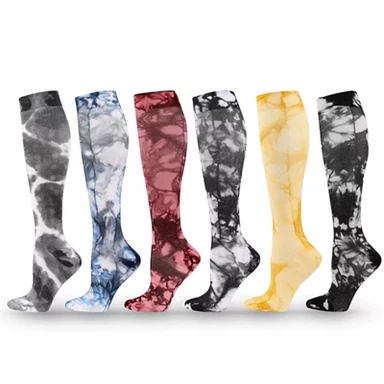
Design-driven purchase: Morandi colors, marble patterns, gradient dyeing, and collaborative prints transform socks from "functional items" into "fashion items."
Gift boxes/sets: 3-5 themed sets (such as "Morning Energy" or "Moonlight Meditation") are becoming a blockbuster strategy for DTC brands.
Native social media content: Stylish socks = spontaneously shared content on Instagram/TikTok.
Patent trend signals:
According to GreyB's patent analysis, global patent applications related to Pilates socks were active from 2024 to 2026, focusing on:
The arrangement of silicone particles and anti-slip pattern design
Seamless knitting technology and zoned pressure control
Recyclable/biodegradable material formulations
This means that technological barriers are forming, and early adopters have the opportunity to build a patent moat.
IV. Sustainable Materials: From "Addendum" to "Essential"
Key Trend: Global sportswear giants are redefining the yoga sock category with sustainable materials.
Nike launched a sustainable yoga sock line made from recycled materials in February 2024.
Bamboo fiber, recycled polyester, and organic cotton are becoming mainstream material options for yoga/Pilates socks.
European and American consumers are willing to pay a 15%–25% premium for eco-certified products.
GOTS (Global Organic Textile Standard) certification is becoming an "invisible ticket" to the European market.

Based on the analysis of the above four parts, a clear logical chain has emerged: the market is expanding-the global yoga/Pilates studio market is heading towards $280 billion with a compound annual growth rate of over 10%, and every newly opened studio represents an incremental consumption scenario for anti-slip socks; regions are differentiating-North America is focusing on original design and brand narrative, Europe is prioritizing certification and cost-effectiveness, and the Asia-Pacific region is prioritizing both functionality and aesthetics; products are evolving-from silicone partitioned anti-slip to 3D ergonomics and then to color aesthetics driven by emotional value, technological barriers and patent moats are forming; materials are upgrading-sustainability has moved from marketing rhetoric to a basic entry requirement, with GOTS, OEKO-TEX, and GRS being the hard currency in the European market, and bamboo fiber and recycled polyester becoming new preferences for European and American consumers.